
From property walk to service details: guide for Property Planning
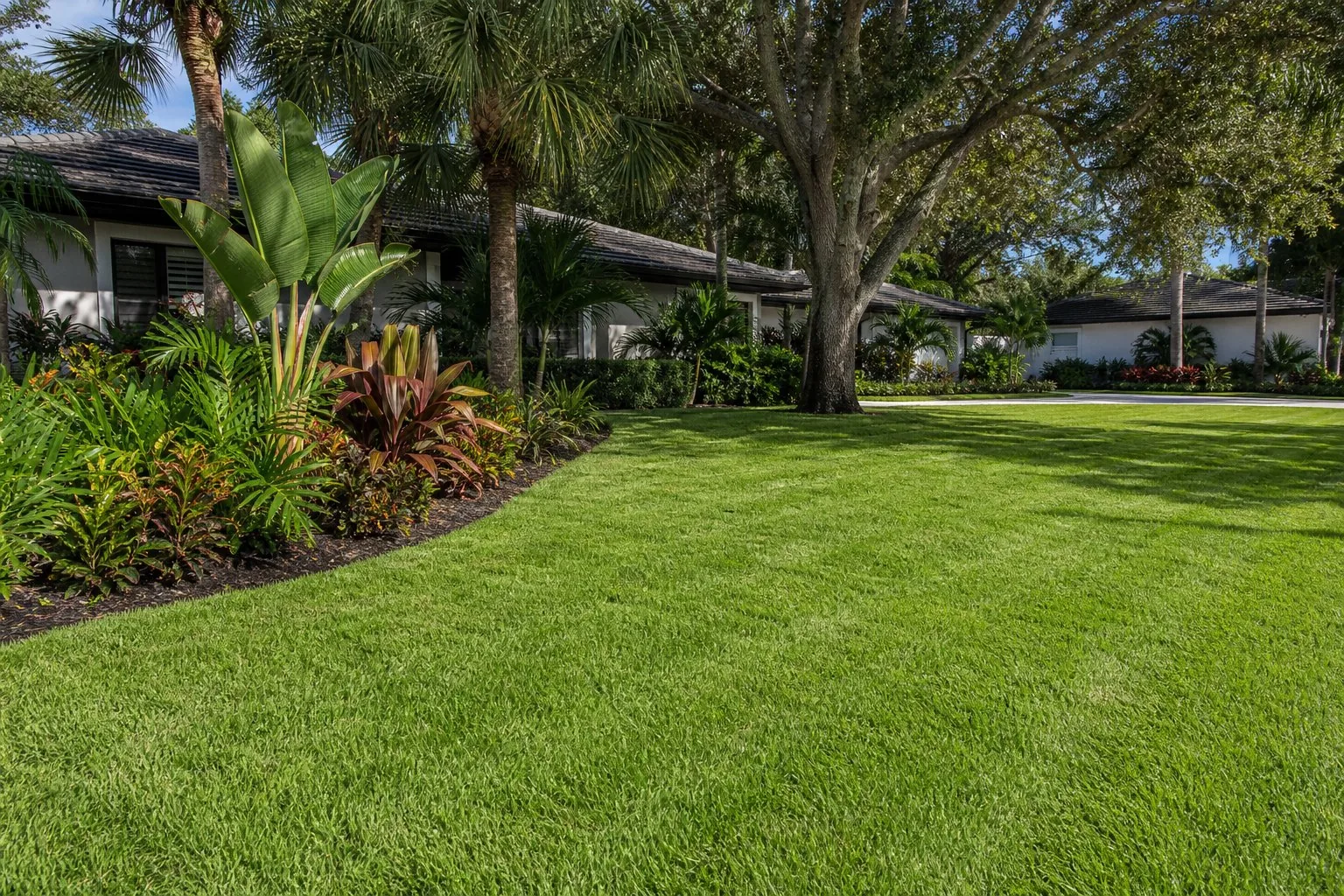
Sod installation lays established turf onto a properly prepared bed, producing a finished lawn immediately. In Sarasota it is not merely the fastest option for St. Augustinegrass — for that species it is one of the only options, and establishing it successfully under a once-a-week irrigation restriction takes planning rather than luck.
From property walk to service details: guide for Property Planning
University of Florida IFAS Extension notes that St. Augustinegrass is established by vegetative propagation only, which includes sod, plugs, or sprigs. There is no seeding route. That is why sod is the standard method for establishing or repairing a lawn across this region rather than one choice among several.
St. Augustinegrass earns its dominance here. UF/IFAS describes it as producing a green to blue-green dense turf that is well adapted to most soils and climatic regions in Florida, with relatively good salt tolerance and, in certain cultivars, better shade tolerance than other warm-season grass species. On a coast with sea air, sandy soils, and mature tree canopy, all three attributes count.
Choosing the right sod
Cultivar selection should follow the site. Standard cultivars such as BitterBlue, Classic and Floratam differ meaningfully in their tolerances, and shade is usually the deciding factor — certain cultivars handle it noticeably better than others, which matters under live oaks or on the north side of a house. Salt exposure and traffic are the other considerations. Choosing a cultivar for a sunny open lawn and laying it under heavy canopy is a common and expensive mistake.
From property walk to service details: guide for Property Planning
Removal and clearing. Existing grass, weeds, and debris are removed. Laying sod over existing turf produces poor root contact and an uneven surface.
Grading. The ground is graded for drainage away from the house and to remove the low spots that would otherwise hold water and scalp under a mower — a real consideration in a region that receives intense wet-season rainfall.
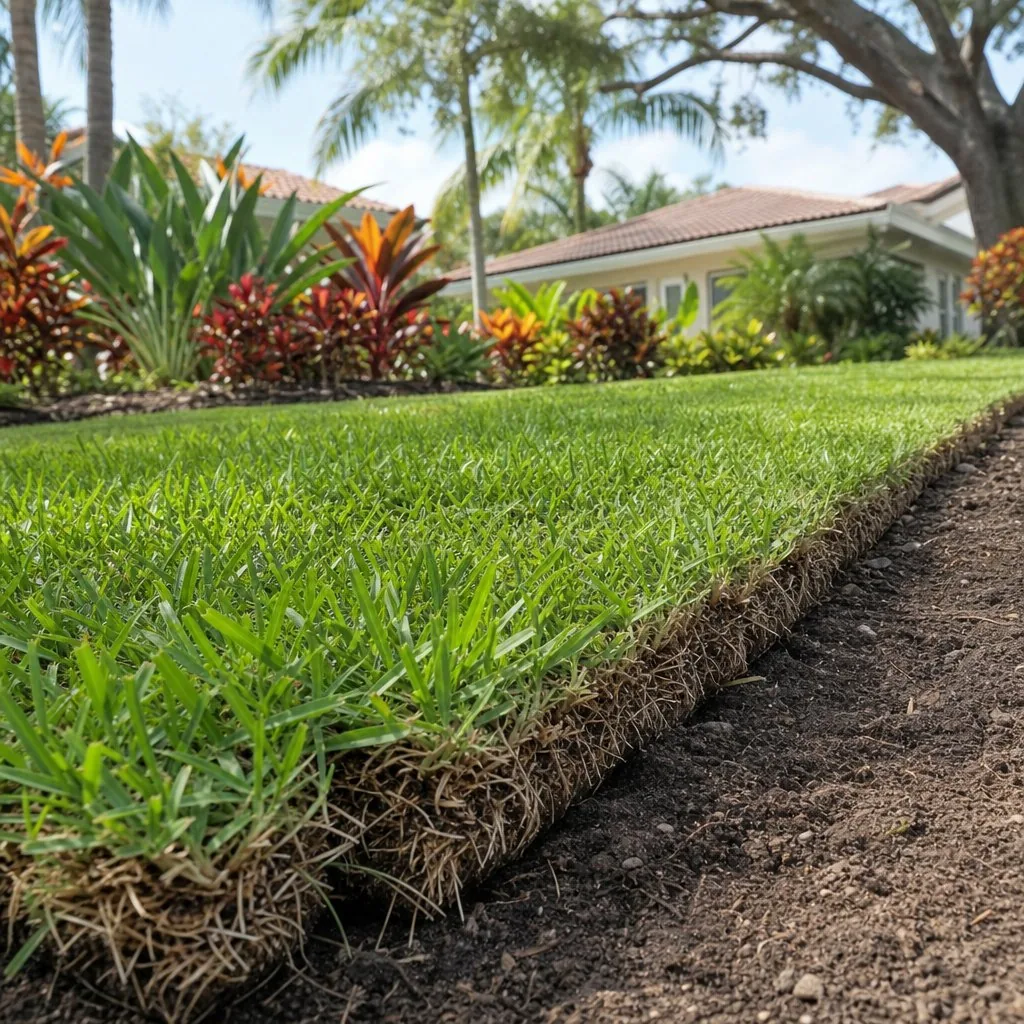
Soil preparation. The surface is prepared so roots make immediate contact and can move down into the profile. On the sandy soils common here the concern is less compaction than moisture retention, which makes establishment watering more demanding rather than less.
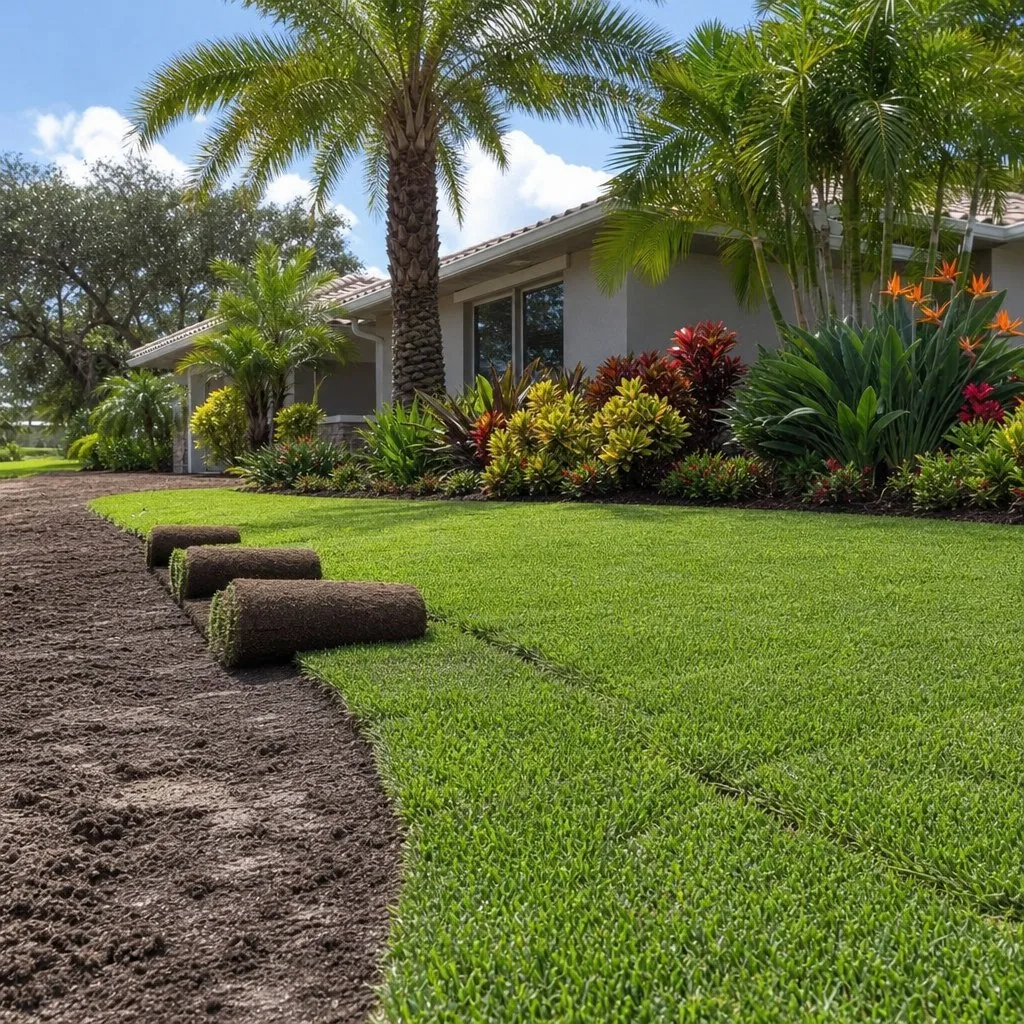
Laying. Rolls are laid tight with staggered seams, cut cleanly at edges and around obstacles, and pegged on slopes where needed.
Rolling. The lawn is rolled to press roots into firm contact with the soil beneath. Air gaps under sod are a leading cause of patchy establishment.
First watering. The new lawn is watered thoroughly immediately, because sod that dries before rooting does not recover well.
Establishment under a once-a-week restriction
This is the part that requires genuine planning in Sarasota right now. The county is under a Modified Phase III "Extreme" Water Shortage order extended through October 1, 2026, limiting irrigation to once per week by address last digit, with sites under one acre restricted to 12 a.m.–4 a.m. or 8 p.m.–11:59 p.m. on the assigned day.
New sod needs consistent moisture while it roots, which is a different requirement from an established lawn. Anyone installing sod here should establish, before the sod is ordered, what watering provision applies to their situation under the order in force at that time, and plan the installation around it. Restrictions of this kind commonly make specific provision for new turf establishment, and confirming the current terms with the water provider ahead of installation is the sensible step — laying sod first and asking afterwards is how new lawns are lost.
Timing helps as well. Sod laid into the most punishing heat demands far more of an establishment schedule than sod laid when conditions are gentler.
From property walk to service details: Budget Inputs for Property Planning
Cost depends on the area, the cultivar selected, how much existing lawn and debris must be removed and hauled, the grading and soil preparation required, and access for delivery. Slopes and awkward access add labour. Preparation is the item most often trimmed to save money and the one most likely to cost more later, because sod laid onto poorly prepared ground underperforms regardless of its quality. We measure and quote on site.
Timeline
Most residential installations are completed in one to a few days: removal and haul-off, grading and preparation, then laying and rolling. Sod is best laid promptly after delivery rather than left stacked, particularly in heat. Given proper watering, rooting typically begins within the first couple of weeks, and the lawn should be kept off heavy traffic until it has knitted.
From property walk to service details: guide for Property Planning
Wait until the sod has rooted well enough not to shift under the mower. From there, UF/IFAS guidance for standard St. Augustinegrass cultivars mowed with a rotary mower is to maintain a height of 3.5 to 4 inches, removing no more than one-third of the leaf blades at any mowing. Mowing tall is particularly valuable under watering restrictions, because taller grass shades its own root zone and holds moisture longer between weekly cycles. For watering, UF/IFAS guidance is to apply one-half to three-quarters of an inch per irrigation application.
Local constraint: the current water shortage order
Sarasota County is under a Modified Phase III "Extreme" Water Shortage order, extended through October 1, 2026. Irrigation is limited to once per week by the last digit of the address — 0 and 1 Monday, 2 and 3 Tuesday, 4 and 5 Wednesday, 6 and 7 Thursday, 8 and 9 Friday — and for sites under one acre only between 12 a.m. and 4 a.m. or between 8 p.m. and 11:59 p.m. on the assigned day. Any sod installation here should be planned around the restriction terms current at the time of installation. (Sources: Southwest Florida Water Management District / Sarasota County; UF/IFAS Extension ENH5/LH010.)
Frequently asked questions
Can I seed a St. Augustine lawn instead of sodding? No. UF/IFAS states that St. Augustinegrass is established by vegetative propagation only — sod, plugs, or sprigs.
Which cultivar should I choose? It depends primarily on shade, since certain cultivars tolerate it considerably better than others. Salt exposure and traffic are the other factors.
Will new sod survive on one watering day a week? Establishment needs more consistent moisture than an established lawn, so the watering provision applying to new turf under the current order should be confirmed with the water provider before installation and the job planned around it.
How soon can I mow it? Once it has rooted enough not to shift. Then maintain 3.5 to 4 inches, taking no more than one-third of the blade at a time.
How much water does an established lawn need per cycle? UF/IFAS guidance is one-half to three-quarters of an inch per irrigation application.
Is St. Augustine a good choice near the water? It has relatively good salt tolerance, which is a large part of why it is so widely used across this coastal region.
Sources
Southwest Florida Water Management District — district water restrictions: swfwmd.state.fl.us. UF/IFAS Extension — St. Augustinegrass for Florida Lawns (ENH5/LH010): edis.ifas.ufl.edu/lh010.
Review sod establishment with Gulf Coast drainage notes
What is sod installation, and how fast is the result?
Sod installation lays established turf onto a properly prepared bed, producing a finished lawn immediately rather than developing from bare ground over months. Sarasota Greenscapes covers the service in its Sarasota Property Planning guide, which runs from the initial property assessment through the specific details of the work.
Why is sod the standard route for St. Augustinegrass lawns?
St. Augustinegrass is established by vegetative propagation only, meaning sod, plugs or sprigs, with no seeding route, so sod installation is the standard method here. Laying established turf onto a properly prepared bed produces a finished lawn immediately, and cultivar choice usually turns on shade. Sarasota Greenscapes handles that selection across Sarasota.
How is the right St. Augustinegrass cultivar chosen for a yard?
Shade tolerance usually decides it. Standard cultivars such as BitterBlue, Classic and Floratam differ meaningfully in their tolerances, so a spot under live oaks or on the north side of a house calls for a different choice than an open lawn. Salt exposure and traffic follow. Sarasota Greenscapes matches cultivar to site across Sarasota.
From property walk to written acceptance
- Review Before CommitmentThe property review and estimate do not require the owner to proceed with the project.
- Walkthrough to Written ScopeObserved conditions, included work, and price are written down before a schedule is accepted.
Get a Free Quote
Describe the Sarasota site, its water movement, and the intended outdoor use.
Define the Sarasota Property Objective
Share the drainage, growth, access, and outdoor-living priorities so the Gulf Coast work area and outcome can be documented.
Get a Free QuoteFrequently Asked Questions
Can a St. Augustine lawn be started from seed?
No. St. Augustinegrass is established by vegetative propagation only, which means sod, plugs or sprigs. There is no seeding option to price against, so the comparison between quotes is about preparation, grade, soil amendment and the establishment plan rather than about a cheaper way of getting grass into the ground. Source: UF/IFAS Extension ENH5/LH010.
What watering is permitted while new sod establishes?
For its first sixty days a new lawn is exempt from the one-day schedule. Watering is allowed on any day of the week through day 30. From day 31 to day 60 it drops to three days a week, with even-numbered addresses on Tuesday, Thursday and Sunday and odd-numbered addresses on Monday, Wednesday and Saturday. A written record of that establishment watering has to be kept. After day 60 the lawn moves onto the one-day-per-week schedule set by its address. Source: SWFWMD, checked 3 August 2026.
When can new sod first be mown?
Not until the roots have pegged down into the soil, generally fourteen to twenty-one days after planting. Pegging means the sod cannot be lifted without appreciable force. Mowing before that point tears the sod rather than cutting it. Once established, standard cultivars are maintained at three and a half to four inches. Source: UF/IFAS Extension ENH5/LH010.
Does the soil under new sod need work first?
It is worth knowing before the sod arrives rather than after. A soil test for pH and salinity belongs before planting, and a newly sodded lawn on sand with little organic matter needs more feeding than a bed that has been fertilised for years. Where soils or irrigation water run above pH 7.0, yellow blades often point to an iron or manganese deficiency rather than to a lack of water. Source: UF/IFAS Extension ENH5/LH010.
Which cultivar suits a shaded part of the property?
Not Floratam. It is coarse-textured, has poor cold and shade tolerance relative to other St. Augustinegrass cultivars, and does not persist well below about six hours of sunlight a day, though it is the most widely produced cultivar in Florida. Certain cultivars have better shade tolerance than other warm-season species, so shade is a cultivar question and sometimes a canopy question. Source: UF/IFAS Extension ENH5/LH010.
What should a written sod scope name?
It should name the area being sodded with its measurements, the cultivar being supplied and the sun exposure it needs, the grade preparation and any soil amendment included, the establishment watering schedule being handed over and who keeps the written record of it, debris removal, and anything excluded. Those points are what make two sod quotes comparable.