
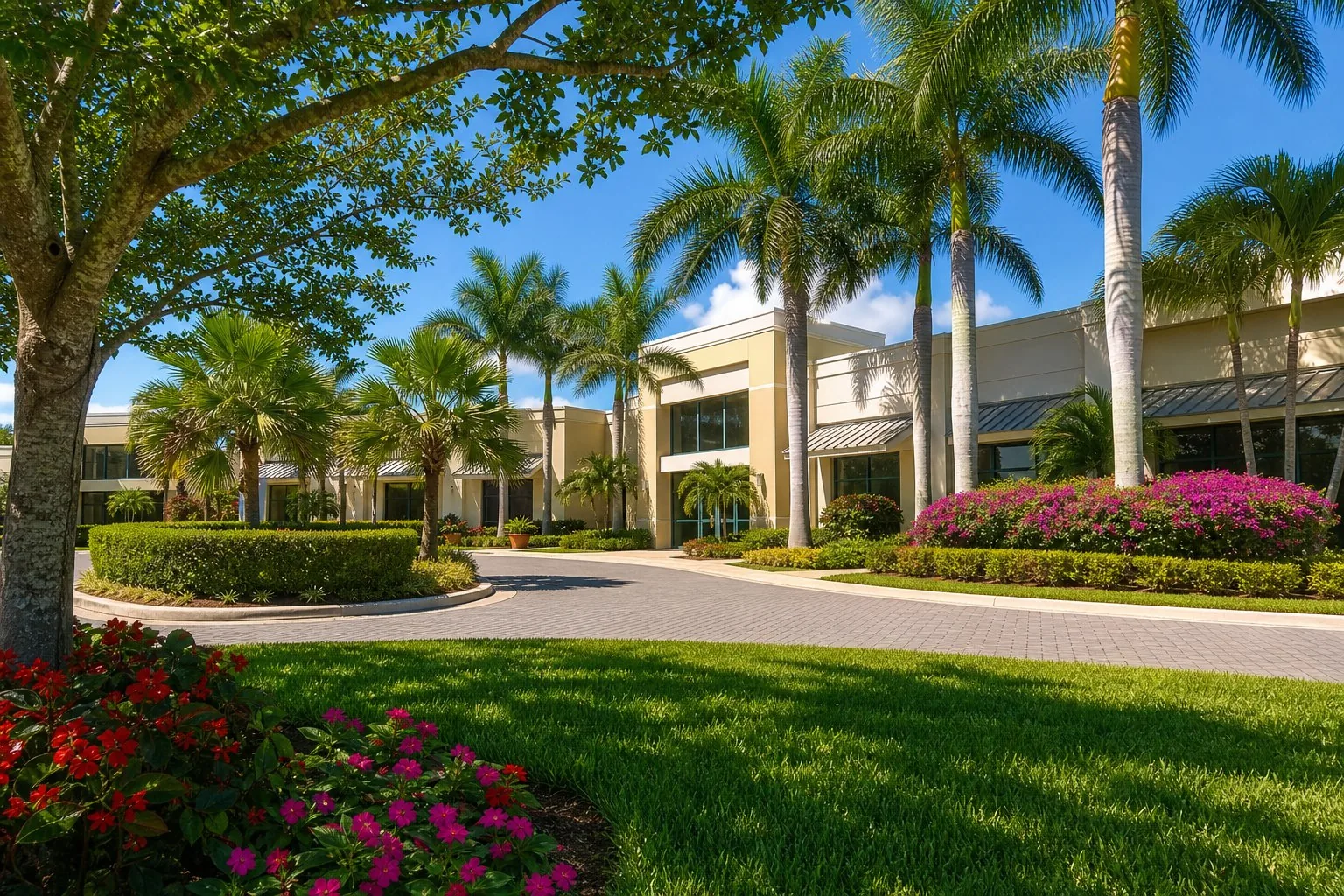

Commercial landscaping in Sarasota comes down to scheduled grounds care that works inside a once-a-week water allowance and keeps a property looking kept every week of the year. We scope offices, retail centers, condominiums and association common areas after a site walk. Call (941) 422-7599 or request a free quote.
This page covers how a commercial grounds scope is built, what the water district and the county require of a Sarasota site, how recurring maintenance is separated from capital work, and the questions a property manager or board should ask any bidder before signing.
Gulf Coast sand, salt in the air and a long wet season are what commercial landscaping faces around Sarasota, so Sarasota Landscaping Services brings lawn mowing and irrigation service crews that work in those conditions; call (941) 422-7599 or request a free estimate.
What does commercial landscaping in Sarasota include?
Commercial grounds work is the recurring care of turf, beds, trees and palms, the irrigation that feeds them, and the seasonal refresh that keeps a property presentable. It is scoped as a written list of tasks and frequencies, so the owner can see exactly what each visit covers and compare bids line by line.
For most Sarasota sites that list has five parts. Turf care with mowing height set for St. Augustinegrass. Bed maintenance, including weeding, mulch and edge lines. Irrigation inspection and repair, because a commercial system runs mostly at night and nobody watches it fail. Palm and tree trimming on a schedule. And seasonal color or plant replacement where the property wants it.
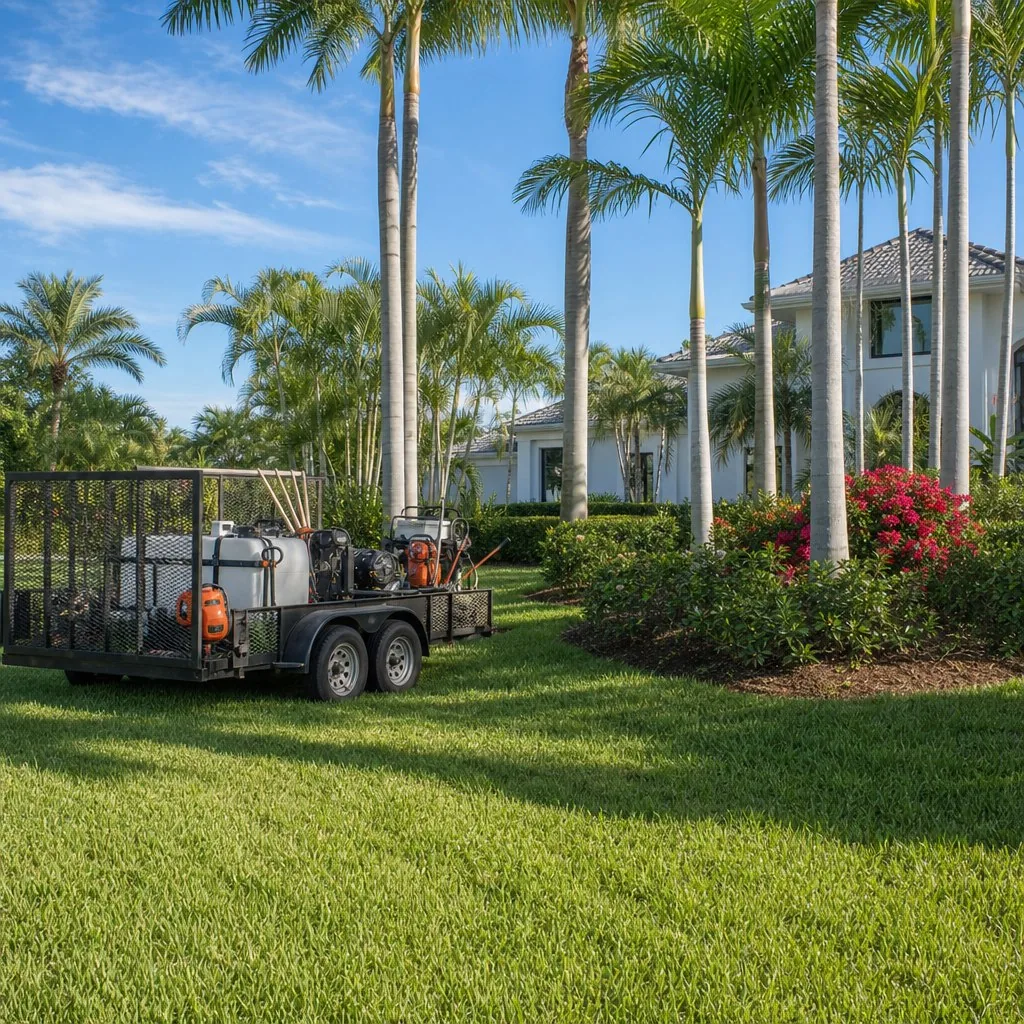
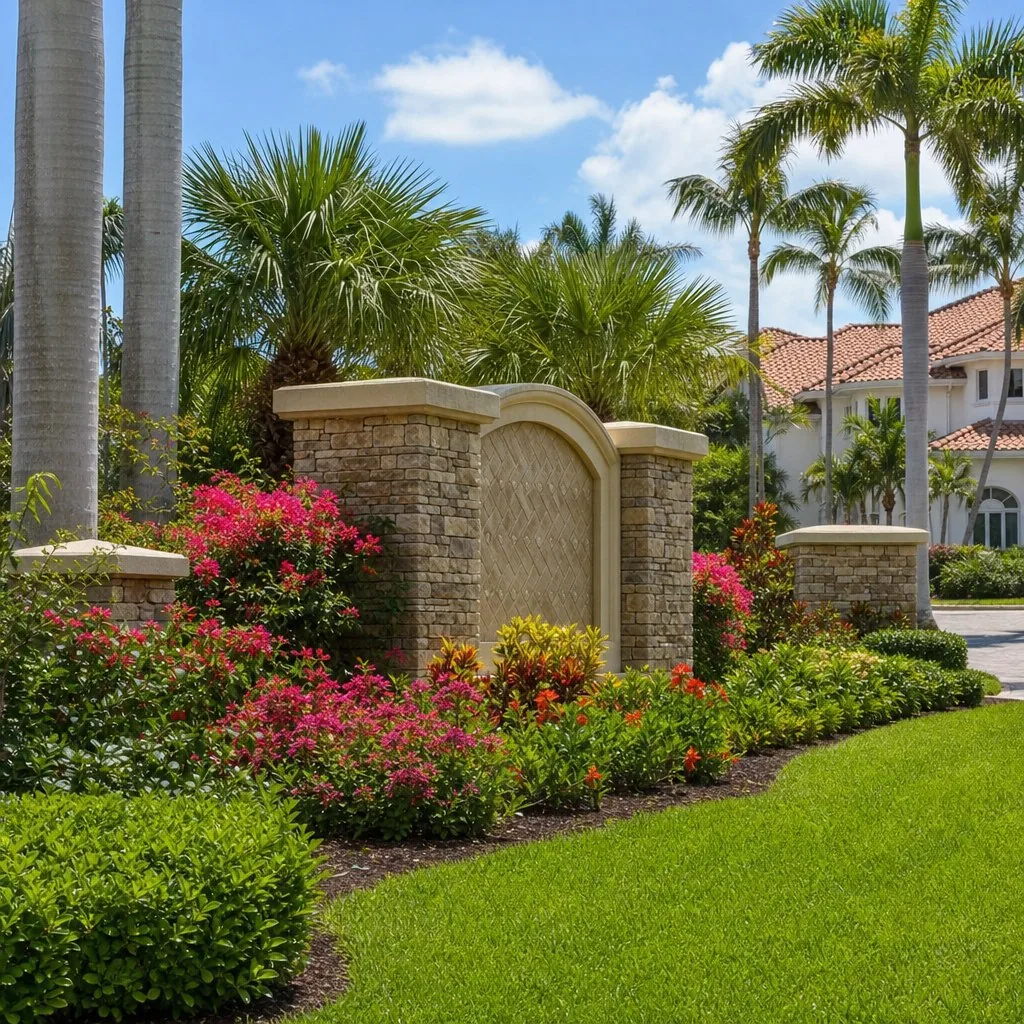
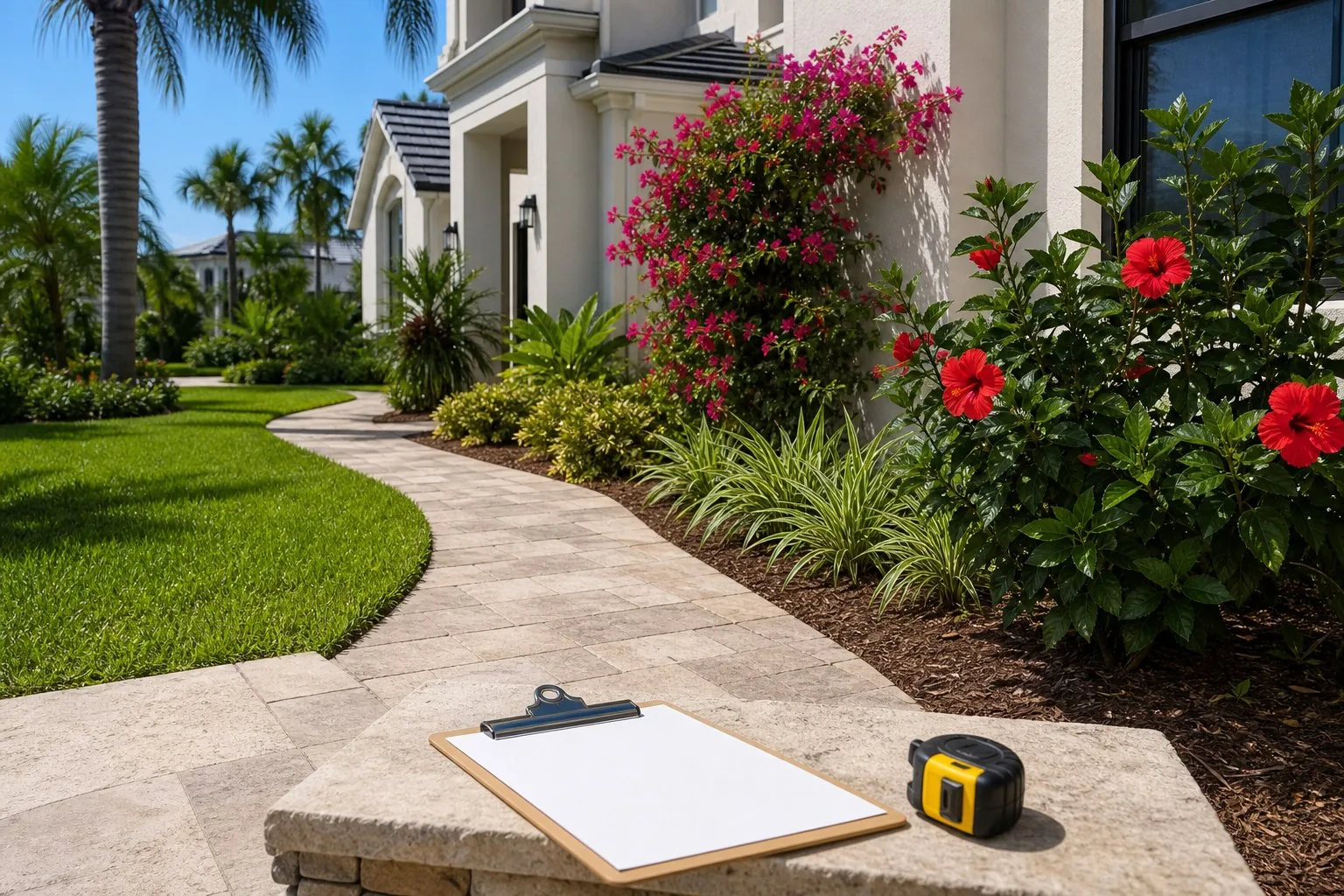
We separate recurring work from capital work in the scope. Mowing, edging and trimming are a monthly line. Renovating a tired bed, replacing a dead tree or converting turf to a planted area is a project with its own price. Mixing the two hides what you are really paying for.
Commercial sites also tend to hide their problems. A retail center with a shared controller, a condo with six pumps and a street frontage with a dozen small zones can look fine from the road while one valve has been stuck for a month. That is why the scope names an inspection frequency for irrigation rather than assuming the mowing crew will notice.
How do Sarasota’s watering rules apply to a commercial property?
The same Modified Phase III order applies, extended through March 31, 2027: lawn and landscape watering is limited to once a week. Commercial sites get their day from the address digit, with common areas and mixed-address sites assigned a different day, so the irrigation controller has to be programmed to the right day and window.
Under the district’s schedule, addresses ending 0 or 1 water on Monday, 2 or 3 on Tuesday, 4 or 5 on Wednesday, 6 or 7 on Thursday and 8 or 9 on Friday. Locations with a mix of addresses, or no determinable address such as common areas of a subdivision, water on Friday. Properties under an acre use one window, 12:01 to 4 a.m. or 8 to 11:59 p.m. Properties of an acre or larger may water before 4 a.m. and after 8 p.m.
That window is the hard ceiling for every zone on a large site. A property with many zones and a low application rate may physically need more run time than the order allows. Our watering restrictions page shows the arithmetic, and our irrigation checks start by measuring what each zone really delivers.
Two more details matter to managers. Hand watering and microirrigation for beds and shrubs, not lawns, may run any day but only before 8 a.m. or after 6 p.m. And enforcement is citation first, without a warning, so a controller left on an old schedule becomes a fine.
Can a homeowner association force a plant replacement during the shortage?
The water district’s order says no homeowner association or other entity may enforce a deed restriction or community standard that requires increased potable or domestic-well water use, including plant replacement for aesthetic standards or pressure washing. Check the current order and the local rule before acting on any such notice.
This is useful for boards and managers on both sides of the table. If you manage a community, a plant-replacement program that adds water demand is not something you can enforce right now. If you live in one, a notice that asks you to replace plants for looks is something to raise in writing. The order also says that compliance with association or aesthetic standards does not make annual pressure washing necessary maintenance.
Commercial plans can keep appearance high on less water instead: smaller turf, drip-fed beds and tougher plant material. In deed-restricted communities such as Lakewood Ranch and Palmer Ranch, we work from the approved palette and prepare plant lists and layouts in the format a review committee expects.
What does our commercial grounds process look like, step by step?
It runs from a site walk to a written scope in six steps: walk and map the property, record the water and soil facts, split recurring from capital work, price the written scope, agree a schedule, then start with an irrigation check. You approve the scope before any work is scheduled.
- Site walk and map. We walk the grounds with whoever manages the property, mark turf, beds, trees, palms, irrigation zones and access points, and note what the board or tenant complains about. This is a single visit and it carries no obligation.
- Water and soil record. We write down the assigned watering day, the controller program and the zones that fail to finish inside their window. We photograph ponding and low spots, and take soil samples from the planting zones instead of assuming one soil across the site.
- Recurring versus capital. Everything that repeats goes on one schedule. Everything that is a project, such as a bed rebuild or a tree replacement, gets itemized separately. You decide which capital items to do now and which to defer.
- Written scope and price. Each task is listed with a frequency and the access it needs. The price is written against that list, so another bidder’s number can be compared line by line.
- Schedule and access. You tell us the hours that suit tenants and residents, where crews can park and which gates need codes. We confirm the visit pattern for the wet-season growth surge and the quieter winter months.
- Start with the irrigation check. Before the first mow of a new account we run each zone, check coverage and set the controller to the right day and window, so the grounds are not being punished by the watering order from day one.
How much does commercial landscaping cost in Sarasota?
We do not publish a per-acre number, because acreage is the smallest piece of it. Turf area, bed count, palm count and height, irrigation condition and access decide the price. We write the scope after a site walk and the estimate does not obligate you to proceed.
What moves a commercial number is easy to list. A flat parking-lot island is a different job from a sloped lakefront edge. Fifty small palms over a walkway take more time than five large ones in an open lawn. A system with mismatched heads costs more to keep alive than a well-zoned one. And a property that needs weekly visits through the wet season costs more than one that can stretch to every other week in the dry months.
Be careful with residential shortcuts. The county’s $7,500 and $15,000 permit thresholds are written for single-family homes, so they do not simply carry over to a commercial site. For capital work that changes structures, drainage or tree cover, check with the county Building department and the Planning and Development Services office before you lock a budget.
What does the county require before trees or palms are removed on a commercial site?
The county recommends contacting a County Environmental Specialist before removing any native tree with a trunk diameter over four inches or a palm with a clear trunk over eight feet. A permit may be required, and replacement planting standards can apply, so confirm before any removal is scheduled.
When replacement planting is required, county guidance asks for trees that are at least eight feet tall with a two-inch diameter, each in a mulched bed at least three feet across and three inches deep. Cabbage palm and wax myrtle are allowed to make up no more than 25 percent of a required replant unless staff approve otherwise. Those details change the cost of a removal, which is why it belongs in the scope before the chainsaw does.
Palms need different handling from broadleaf trees, and the commonly requested hurricane cut is the wrong answer. UF/IFAS Extension says only dead fronds should generally be removed and that a hurricane cut is unnecessary and can be harmful because it takes away the green fronds a palm needs to feed itself. Our palm and tree trimming page explains what we remove and what we leave.
What fertilizer rules does a commercial property have to follow?
Sarasota County prohibits any fertilizer containing nitrogen or phosphorus from June 1 through September 30. For the rest of the year at least 50 percent of the nitrogen must be slow-release, and fertilizer must stay at least 10 feet from any waterway. Those rules apply to commercial grounds and association common areas.
Retention ponds and lakes are the common trap on commercial sites. A plan that treats the lawn to the water’s edge puts fertilizer where the rule says it cannot go. The county recommends a six-foot low-maintenance zone of landscape plants beside a waterway, which also cuts mowing on the steepest edge. It suggests iron products with micronutrients to keep turf green in summer, and leaving clippings on the lawn.
Our scope writes the blackout dates and the setback into the maintenance calendar so the crew does not need to remember them. If a landscaper proposes a summer fertilizer program on a Sarasota property, ask how it complies.
How do you keep turf healthy on one day of water?
Mow at the right height, apply the full depth on the assigned day, and fix coverage problems instead of running longer. UF/IFAS guidance for standard St. Augustinegrass is 3.5 to 4 inches with a rotary mower, never removing more than one-third of the blade, and one-half to three-quarters of an inch of water per application.
Taller grass shades its own root zone and holds moisture between events, which matters when the allowance is one soak a week. A shallow application produces shallow roots and a lawn that wilts by day four. Over a large commercial lawn those habits compound, so the mowing height and the irrigation depth are both written into the scope and checked during routine visits.
Where a zone cannot be made to finish inside its window, the honest answer is to change the plant material: convert the area that nobody walks to a planted bed, or switch a strip to microirrigation. Our lawn care page covers the residential version of the same rules.
How should a commercial site get ready for storm season?
Preparation starts with the trees and palms, not a blanket hard cut. UF/IFAS Extension says storm prep should remove dead, diseased and damaged wood, watersprouts, crossing branches and growth toward the center of a tree, and that each tree should be assessed individually rather than pruned on a fixed yearly rule.
Trees growing close to buildings, parking and walkways get priority because they are the ones that turn into hazards. Loose debris on the ground matters too, since strong wind can pick it up and carry it. Extension also notes that palms generally survive storms better than many oaks and pines, though species differ: sabal palms and Canary Island date palms take higher wind than queen palms.
After a storm the same guidance applies in reverse: inspect trees carefully for damage that may not be obvious but could cause branches or whole trees to fail later. We schedule a pre-season visit and a post-storm walk into the annual calendar for commercial accounts, so debris and hazard checks are scheduled rather than improvised.
How do you plan seasonal color and bed renewal on a commercial property?
We treat beds as a rotation, not a yearly teardown. Structure plants such as palms, saw palmetto and muhly grass hold the composition, and seasonal color sits where it is seen most, at entries and signs. That keeps the water and replacement bill predictable and the property looking kept without a full replant.
Color areas go on drip lines so they can be watered by microirrigation before 8 a.m. or after 6 p.m. on any day, which frees the weekly turf window for the grass. Mulch is refreshed to slow evaporation on sandy soil that holds almost no water, and edges are recut so a bed line reads clean from the road. A tired bed gets rebuilt in place and keeps its healthy specimens.
If a property has drifted, we start with a written bed-by-bed list: keep, trim, replace, remove. You approve the list, and capital items are priced separately from monthly service.
How do you work around tenants, residents and site access?
We agree the visit pattern before the first mow: which days, which hours, where crews park, which gates need codes and which areas must stay clear at certain times. A commercial account runs on a predictable rhythm so tenants and residents are never surprised by equipment.
Noise-sensitive areas, outdoor dining and pool decks get their own notes in the scope. Debris is hauled away on the same visit, and blowers are used to clear hard surfaces rather than leaving clippings in a drive. Where the watering window is overnight, the irrigation check happens by daylight so crews are not running controllers at 3 a.m. to find faults. One written scope and one point of contact keeps the conversation short.
What does a typical commercial job look like?
These are typical scopes used to show how work is structured. They are illustrations, not completed projects, and each is priced only after a site walk. Conditions such as drainage, shade and proximity to water change the number more than the property type does.
A typical small office or retail frontage: weekly mowing and edging of the turf strip, monthly bed maintenance, an irrigation check at the start of each season, quarterly palm clean-up, and one bed refresh a year where plants have failed. The recurring work is one monthly line and the refresh is a separate capital item.
A typical condominium or association common area: a weekly crew visit through the wet-season growth surge, a drip conversion on the foundation beds, a pond-edge planting that respects the 10-foot fertilizer setback, and palm trimming ahead of storm season that removes dead fronds only. The controller is programmed to the common-area day and window.
A typical island or waterfront property: a salt-tolerant palette of sea grape, cocoplum, green buttonwood, saw palmetto and muhly grass, reduced turf, and scheduled care on a consistent standard through the winter high season. Our Longboat Key and Siesta Key pages describe those exposure conditions.
What should a property manager ask any grounds bidder?
Ask for the task list with frequencies, how the controller will be programmed to the assigned day and window, how the fertilizer blackout and waterway setback are handled, what happens when a zone cannot finish in time, and how capital items are priced separately from the monthly line.
Also ask who your point of contact is, how a missed visit gets reported and fixed, what the plan is for storm debris, and whether the scope includes irrigation inspection or leaves that to someone else. A bid that is one lump number with no task list cannot be compared, which is usually the point. Our pricing guide and permits and project planning page list the county references so you can check a bidder’s claims.
Where do you work, and how do we start?
We work across Sarasota County, including Venice, North Port, Osprey, Nokomis, Gulf Gate and Fruitville, alongside the island and village communities named above. Start with a site walk. Send the address, the gate and access notes, and what bothers the board or tenants today.
We review those details before outlining an estimate. The estimate does not require you to proceed, and the written scope belongs to you either way. If you want to see how the water plan and the design plan tie together, read our landscape design page and then ask for a free quote.
One last practical point for boards. Ask any bidder to put the irrigation controller schedule, the fertilizer calendar and the palm-trimming policy in writing as part of the proposal. Those three documents tell you more about how a crew will treat the property than any photo gallery, and they are easy to compare across bids.
Gulf Coast pricing in black and white. You get an itemized proposal for commercial landscaping after one walkthrough, with no obligation attached: request a free estimate, or phone (941) 422-7599.
From property walk to written acceptance
- Review Before CommitmentThe property review and estimate do not require the owner to proceed with the project.
- Walkthrough to Written ScopeObserved conditions, included work, and price are written down before a schedule is accepted.
Get a Free Quote
Describe the Sarasota site, its water movement, and the intended outdoor use.
Define the Sarasota Property Objective
Share the drainage, growth, access, and outdoor-living priorities so the Gulf Coast work area and outcome can be documented.
Get a Free QuoteFrequently Asked Questions
What drainage clues matter before commercial grounds planning is scoped in Sarasota?
Look for ponding marks, downspout outlets, low edges, compacted traffic paths and water moving toward structures. The commercial grounds planning scope should distinguish a drainage correction from routine surface work and state what was actually observed.
How should a Sarasota commercial grounds planning plan address heavy-rain performance?
Specify how water is expected to cross or leave each work area, where material needs restraint and which elevations must remain unchanged. Performance should be checked after installation without promising the behavior of uninspected adjoining ground.
What should be itemized before this Sarasota commercial grounds planning project is scheduled?
Itemize removal, preparation, quantities, drainage handling, material placement, access, debris handling and the final walkthrough. That list lets the owner separate necessary site work from optional finish choices.