Irrigation is planned around the restriction schedule currently in force for Sarasota County and the Southwest Florida Water Management District, not a generic timer setting.
The work, the materials and the price are written down and agreed with you before anything is scheduled, so the number you approve is the number you pay.
Grass, soil and planting choices are made for sandy coastal ground, salt exposure and a subtropical growing season rather than a national template.
Explore Sarasota properties where drainage, subtropical planting, and outdoor-living needs guided the finished space.
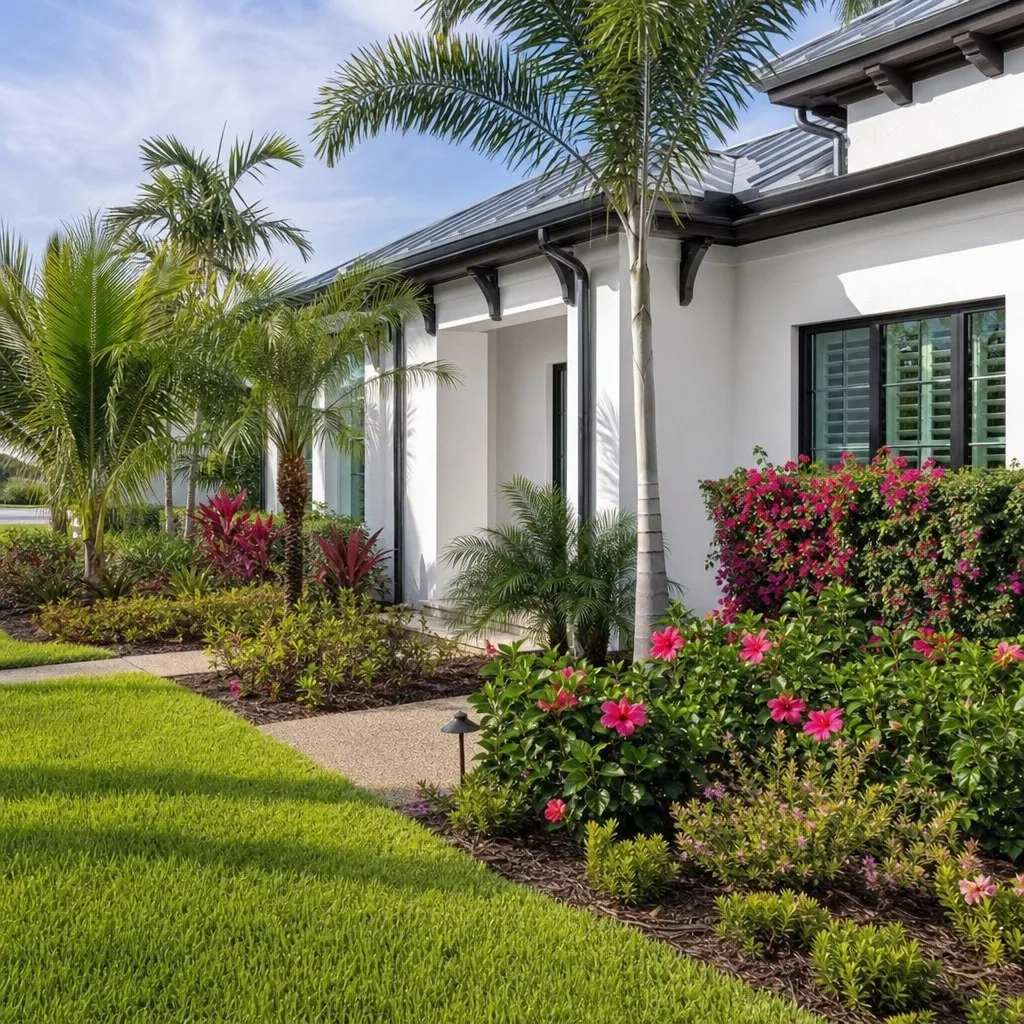
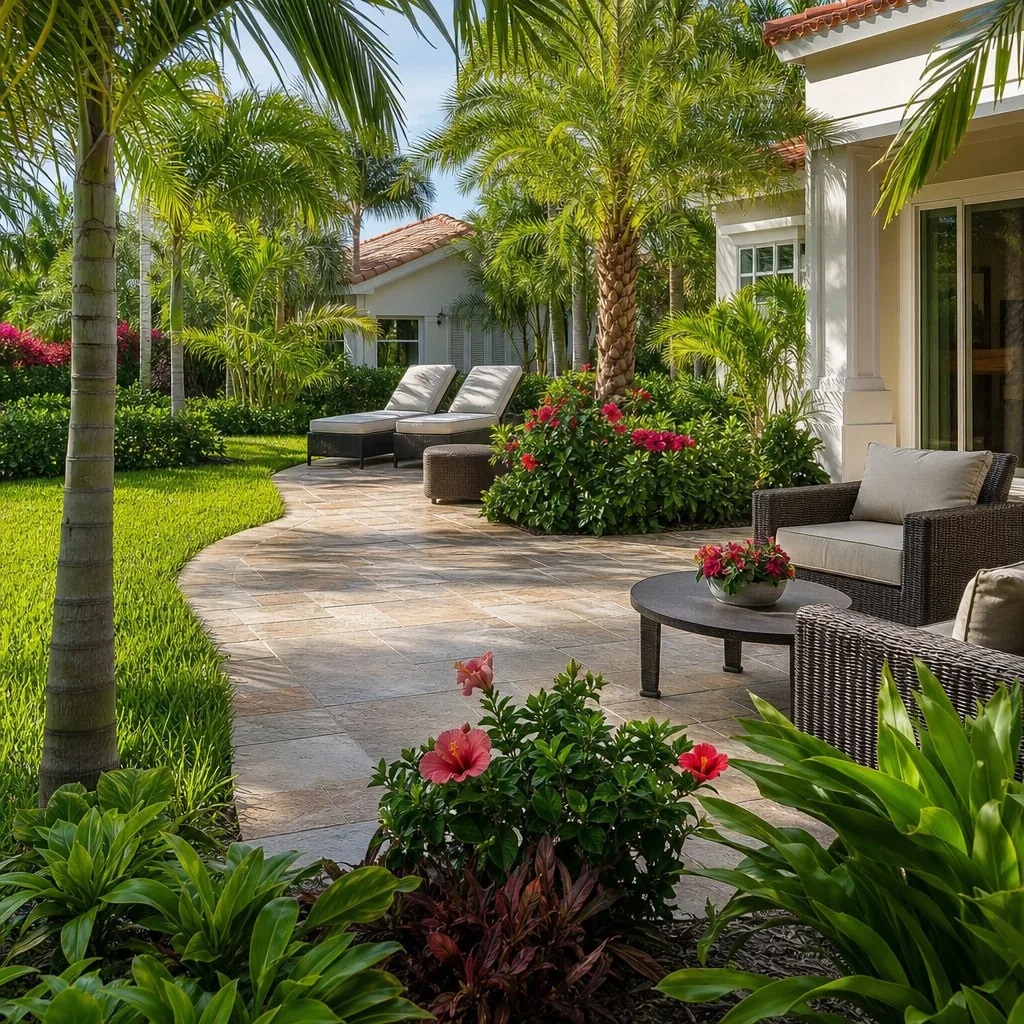
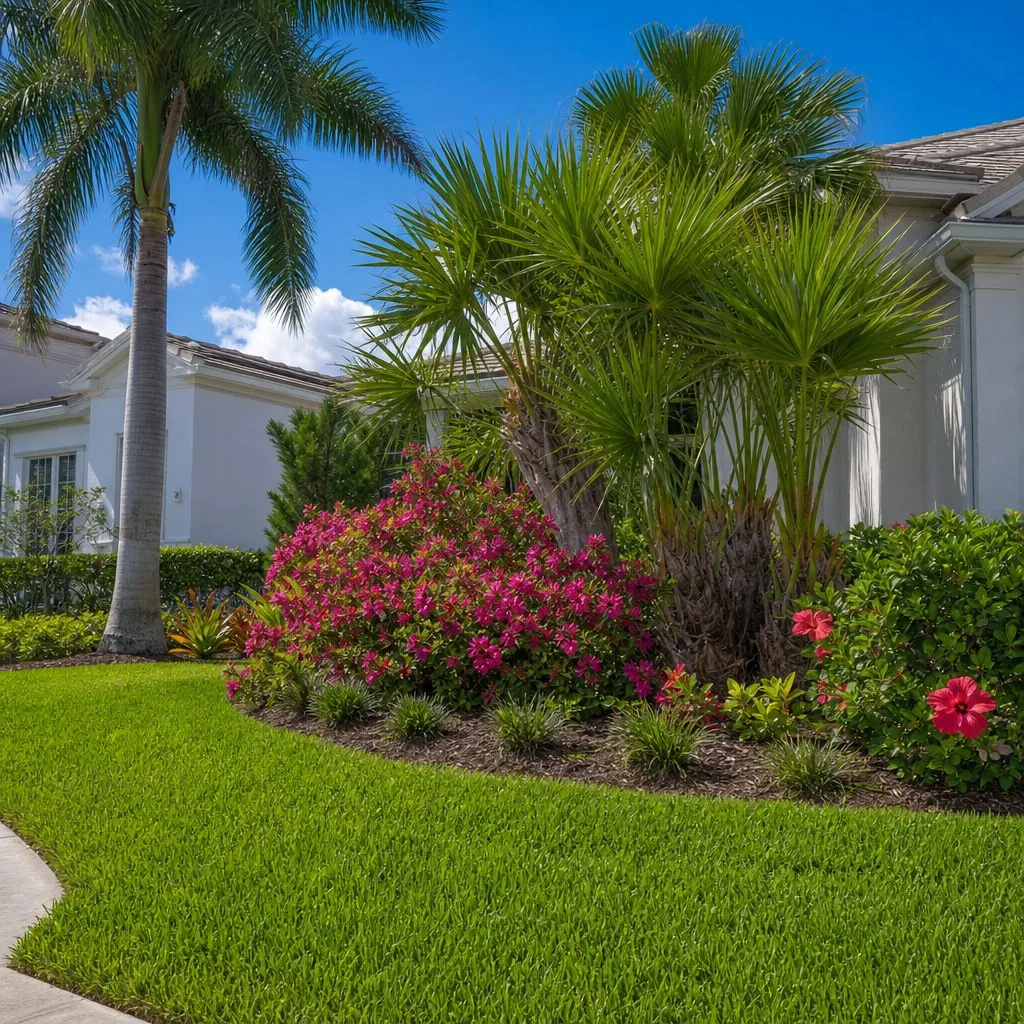
Six Sarasota guides, each written to one subject and sourced to SWFWMD and UF/IFAS Extension.
Sarasota Greenscapes is a local landscaping company serving homeowners across Sarasota and Sarasota County. We help owners plan and maintain yards for the Gulf Coast subtropical climate, the heat, the soil, and the water rules set by the Southwest Florida Water Management District (SWFWMD). Construction and irrigation installation are done by licensed contractors, and we help you scope and compare that work.
What gets planted, what it is planted into and how it is watered are all decided by local conditions rather than by a catalogue. Lawn and landscape watering across Sarasota County is limited to one day a week under SWFWMD’s Modified Phase III restrictions, extended through March 31, 2027, so irrigation is designed to deliver what the grass needs inside a single window instead of spreading it over the week. Turf choice follows the same logic: St. Augustinegrass is the most commonly used lawn grass in Florida and has relatively good salt tolerance, which is what a coastal property needs. Soil is tested for pH and salinity before planting, because a newly sodded lawn on sand with little organic matter has different needs from a bed that has been fed for years. Sources: SWFWMD and UF/IFAS Extension ENH5/LH010, both checked 3 August 2026.
Sarasota Greenscapes works across Sarasota and Sarasota County on both residential yards and commercial grounds, from single properties to offices, retail centres, HOAs and apartment communities. The six services below span irrigation and water management, turf and planting, palm and tree care, design and seasonal upkeep, each scoped to the district’s watering rules, the soil on the site and the salt air of a coastal county.
From zone design and emitter layout through pressure regulation, backflow-safe connections and controller scheduling, planned with you and carried out by a licensed irrigation contractor.
Sized around the one-day-per-week window: SWFWMD limits lawn watering to a single assigned day and, for properties under one acre, to one window of either 12:01 a.m. to 4 a.m. or 8 p.m. to 11:59 p.m. Source: SWFWMD, checked 3 August 2026
Frond and canopy work on palms and shade trees: deadwood removal, crown cleaning, clearance from roofs and lines, with all cuttings hauled away.
Canopy work is planned around what the turf below it can take: Floratam St. Augustinegrass does not persist well where it receives less than six hours of sunlight a day. Source: UF/IFAS Extension ENH5/LH010
Grades prepared, soil amended, rolled sod laid with tight seams, and the first watering schedule set, by the licensed contractor you hire from the plan.
St. Augustinegrass is established vegetatively only, as sod, sprigs or plugs, and new lawns get a 60-day establishment allowance under the current restrictions: any day in days 1 to 30, three days a week in days 31 to 60, with a written schedule kept. Source: UF/IFAS ENH5/LH010 and SWFWMD, checked 3 August 2026
Mowing at the correct height for your grass type, edging, string trimming and blow-down, with clippings removed each visit.
Standard St. Augustinegrass cultivars such as Bitterblue, Classic and Floratam are maintained at 3.5 to 4 inches, dwarf cultivars at 2 to 2.5 inches, and no more than a third of the leaf blade comes off in any one cut. Source: UF/IFAS Extension ENH5/LH010
Measured site plan, planting palette, materials schedule and phasing, so the build can be priced and staged in a clear order.
Planting is chosen for a coastal site: St. Augustinegrass has relatively good salt tolerance, and a soil test for pH and salinity is taken before planting rather than after. Source: UF/IFAS Extension ENH5/LH010
Grounds maintenance and project planning for offices, retail centres, HOAs and apartment communities, scheduled around tenant and customer access.
Community associations should know that under the current order no HOA may enforce deed restrictions or community standards that require an increase in potable or domestic well water use. Source: SWFWMD, checked 3 August 2026
Four things decide whether a Sarasota landscape holds up: the watering rule in force, the grass in the ground, how it is cut, and what the soil underneath it is doing. Each of these is checkable against a published source, and each is stated below with that source and the date it was checked.
The governing instrument is the Southwest Florida Water Management District’s water shortage order. Its Modified Phase III “Extreme” one-day-per-week restrictions were extended through March 31, 2027, and the order names Sarasota County directly in its coverage. The standard schedule runs by the last digit of the street address: 0 or 1 water Monday, 2 or 3 Tuesday, 4 or 5 Wednesday, 6 or 7 Thursday, 8 or 9 Friday. Watering hours are 12:01 a.m. to 4 a.m. or 8 p.m. to 11:59 p.m., and a property under one acre may use only one of those two windows. Hand watering and microirrigation of beds, shrubs and plant material other than lawn are still allowed on any day, but only before 8 a.m. or after 6 p.m. The district’s own guidance is to check your city or county rules first, because local rules may be stricter than the district’s. Source: SWFWMD district water restrictions, checked 3 August 2026. Our own Sarasota Watering Guide and watering restrictions reference work through what that means zone by zone.
UF/IFAS puts an established lawn’s requirement at 1/2 to 3/4 inch of water per application, which reaches roughly the top 8 inches of soil where most of the roots are, and advises watering when the blades fold, wilt or turn blue-gray, or when footprints stay visible on the grass. Under a one-day rule that whole amount has to land inside a single window. Whether a given system can do that is a measurable fact, not an opinion: set straight-sided cans out across a zone, run it, and time how long it takes to fill them to the 1/2 or 3/4 inch mark. Zones almost never take the same time as each other, which is why a controller programmed with one run time for everything tends to leave some areas dry and others wasting water it is not allowed to use. Source: UF/IFAS Extension ENH5/LH010.
St. Augustinegrass is the most commonly used lawn grass in Florida, widely adapted to warm, humid subtropical regions, producing a green to blue-green dense turf that is well adapted to most soils and climatic regions in the state, with relatively good salt tolerance. It is established vegetatively only, as sod, sprigs or plugs, so there is no seeding option. Cultivar matters: Floratam has poor cold and shade tolerance relative to other St. Augustinegrass cultivars and does not persist well where it gets less than six hours of sunlight a day, while other cultivars handle shade better. The southern chinch bug is the major insect pest of the species, so a thinning patch in full sun near paving is worth checking before it is treated as a watering problem. Source: UF/IFAS Extension ENH5/LH010.
Standard St. Augustinegrass cultivars, Bitterblue, Classic and Floratam among them, are maintained at 3.5 to 4 inches with a rotary mower, dwarf cultivars at 2 to 2.5 inches, and no more than a third of the leaf blade should be removed in any one mowing. Cutting lower than that repeatedly stresses the lawn and discourages deep rooting, which is the opposite of what a once-weekly watering schedule needs. Underneath, a soil test for pH and salinity belongs before planting or at the point of buying a house with an existing lawn, and where soils or irrigation water run above pH 7.0, yellow leaf blades often point to iron or manganese deficiency rather than to a lack of water. A newly sodded lawn on sand with little organic matter also needs more feeding than a bed that has been fertilised for years. Source: UF/IFAS Extension ENH5/LH010, checked 3 August 2026. Our Sarasota Soil and Site Assessment Guide and Sarasota Lawn Care Guide go further.
Irrigation systems. Zones are laid out and the controller programmed by a licensed irrigation contractor against the day and window the property is actually allowed to water in, with pressure regulation and backflow-safe connections, and existing systems are audited before anything is replaced. Palm and shade tree trimming. Fronds and canopies are worked for deadwood, crown cleaning and clearance from roofs and lines, with the light reaching the turf below treated as part of the decision rather than an afterthought.
Sod installation. The grade is prepared and the soil amended before rolled sod goes down tight-seamed, and the establishment watering schedule is set and handed over rather than left to guesswork. The sod itself is laid by a licensed contractor from your plan. Lawn care. Mowing is done at the height the cultivar in the ground calls for, with edging, trimming and blow-down, and clippings removed each visit.
Landscape design. A measured site plan, a planting palette suited to salt air and the sun on each area, a materials schedule and a phasing order, so a build can be priced and staged instead of committed to all at once. Commercial landscaping planning. Grounds maintenance and project planning for offices, retail centres, HOAs and apartment communities, scheduled around tenant and customer access and around the irrigation windows the site is permitted to use.
Sarasota proposal basis: Define the exact project zone, preparation work, quantities, irrigation responsibility, disposal terms, and optional phases so the resulting quote reflects the documented property rather than a copied range.
Whatever the final number is, the project details and the price are written down and agreed with you before work starts. A fuller breakdown of what moves a Sarasota quote up or down is in the Sarasota Landscaping Pricing Guide.
Free written estimates: (941) 422-7599
The Gulf Coast subtropical climate means the wrong plants and the wrong watering fail fast here. These are the things we do differently, and each one is a statement of how the work is run rather than a promise about how it will turn out.
If you are weighing more than one company, our guide to how to choose a landscaper in Sarasota sets out what to ask and what a complete service details should contain, whoever you end up hiring.
Call (941) 422-7599 or send the form below with the address and what you want looked at. Nothing is charged for the visit or the estimate.
We walk the site to see the soil, the drainage, the sun and shade on each area, and what the existing irrigation actually delivers. What we find there is what the plan is built on, not a package picked off a list.
The project details and the price are set out in writing, and both are agreed with you before any work begins. If something on the property changes what is sensible to do, we say so in that document rather than after the fact.
The agreed work is carried out by the contractor you hire, and maintenance visits haul away all debris and cuttings. Watering and mowing instructions for anything newly planted are handed over at completion.
This applies whoever you hire. A service details worth comparing should name:
SWFWMD Modified Phase III “Extreme” water shortage restrictions are in effect, extended through March 31, 2027. Lawn and landscape watering across Sarasota County is limited to one day per week, set by the last digit of your address: 0 or 1 Monday, 2 or 3 Tuesday, 4 or 5 Wednesday, 6 or 7 Thursday, 8 or 9 Friday. Hours are 12:01 a.m. to 4 a.m. or 8 p.m. to 11:59 p.m.; properties under one acre may use only one of those windows. Your city or county rules come first and may be stricter.
Source: Southwest Florida Water Management District, checked 3 August 2026 · Read the Sarasota Watering Guide →
We work across Sarasota and the surrounding communities of Sarasota County. Check the list below for your own area; each one has its own page.
Look for ponding marks, downspout outlets, low edges, compacted traffic paths and water moving toward structures. The whole-property landscape planning scope should distinguish a drainage correction from routine surface work and state what was actually observed.
Specify how water is expected to cross or leave each work area, where material needs restraint and which elevations must remain unchanged. Performance should be checked after installation without promising the behavior of uninspected adjoining ground.
Itemize removal, preparation, quantities, drainage handling, material placement, access, debris handling and the final walkthrough. That list lets the owner separate necessary site work from optional finish choices.
Sarasota Greenscapes covers the city of Sarasota and communities across Sarasota County, including Siesta Key, Lakewood Ranch, Osprey, Nokomis, Venice, North Port, Longboat Key, Palmer Ranch, Gulf Gate and Fruitville. Every property is planned against the same district watering rules and the same Gulf Coast growing conditions, whether it sits on a barrier island or inland.
Move from the property walk to the written property planning scope by itemizing Project-Planning request. Note the observed condition, selected response, measurable completion check, and any responsibility left outside this project.
Sarasota Greenscapes is a landscaping company serving homeowners, HOAs and commercial properties across Sarasota County on the Gulf Coast. The work falls into six groups: irrigation, palm and shade tree trimming, sod, lawn care, landscape design and commercial grounds, each priced after a walk of the property.
Each one is scoped against the county’s one-day watering order, sandy soil and salt air before a price is written down. Call (941) 422-7599 or request a free quote and we will book the property walk.
Ask each company for the same four things in writing: a scope that names what is included and left out, your assigned watering day built into the plan, a price shown against the county’s $7,500 and $15,000 permit thresholds, and who handles anything that needs a permit. Companies that cannot put those on paper are hard to compare.
Our guide to choosing a Sarasota landscaper lists the questions worth asking every bidder.
No honest citywide number exists, because drainage, soil, shade and distance from the water move a price more than any average does. The published figures that shape a budget are county permit thresholds: some work under $7,500 on a single-family home may be exempt, and work under $15,000 gets expedited review.
The Sarasota landscaping pricing guide keeps the county’s exact wording and the dates we read it.
Lawn and landscape watering is limited to one day a week under the Southwest Florida Water Management District’s Modified Phase III order, which the District lists as running through March 31, 2027. Your day follows the last digit of your address, and properties under an acre get one window, either midnight to 4 a.m. or 8 to 11:59 p.m.
Beds and shrubs can be hand watered or run on microirrigation on any day, but only before 8 a.m. or after 6 p.m. Our Sarasota watering restrictions page works through the schedule, and your city or county can set stricter hours, so confirm for your address.
New lawns and plants get a 60-day establishment period under the District’s order. Water any day of the week on days 1 to 30, then three days a week on days 31 to 60, and keep a written watering schedule. After day 60 the once-a-week rule applies again.
Even-numbered addresses use Tuesday, Thursday and Sunday in the second half, and odd-numbered addresses use Monday, Wednesday and Saturday. Our sod page and lawn care page plan around that calendar.
We work across Sarasota County, with dedicated pages for Siesta Key, Lakewood Ranch, Venice, North Port, Longboat Key, Palmer Ranch, Osprey, Nokomis, Gulf Gate and Fruitville, plus the neighborhoods around each of them.
If your street is not named here, check the areas we serve page or call and ask, because the service area runs wider than the pages listed above.
Describe the Sarasota site, its water movement, and the intended outdoor use.