Palm Tree Trimming in Sarasota, FL
Palm trimming removes dead fronds, spent flower and fruit stalks, and storm debris, keeping a palm clean, safe, and healthy. It is a different discipline from pruning a broadleaf tree, and the most important thing a good palm service does is take less rather than more — over-trimming is by far the most common way palms are damaged in this region.
Why palms are pruned differently
A palm is not a branching tree. It has a single growing point at the crown, and it cannot replace lost tissue by growing new limbs elsewhere. Everything the palm has to work with is in the fronds it currently carries, which makes green foliage a live asset rather than something to tidy away.
That single difference drives every sound palm-trimming practice. Removing green fronds takes away the palm’s ability to feed itself and can leave it weaker, thinner, and slower to recover. Damage to the crown is not something a palm grows out of. The conservative approach is not caution for its own sake — it is the only approach the plant’s biology supports.
What proper palm trimming covers
Dead and fully brown fronds. These have nothing left to contribute and are removed. This is the core of routine palm maintenance and, on most palms, most of what is genuinely needed.
Flower and fruit stalks. Removing these tidies the palm, reduces the mess of dropped fruit onto drives, walkways, pools and vehicles, and cuts down on seedlings coming up across beds and lawn.
Loose and hanging material. Fronds that have detached but hung up in the crown are removed — these are the pieces that come down unannounced in wind.
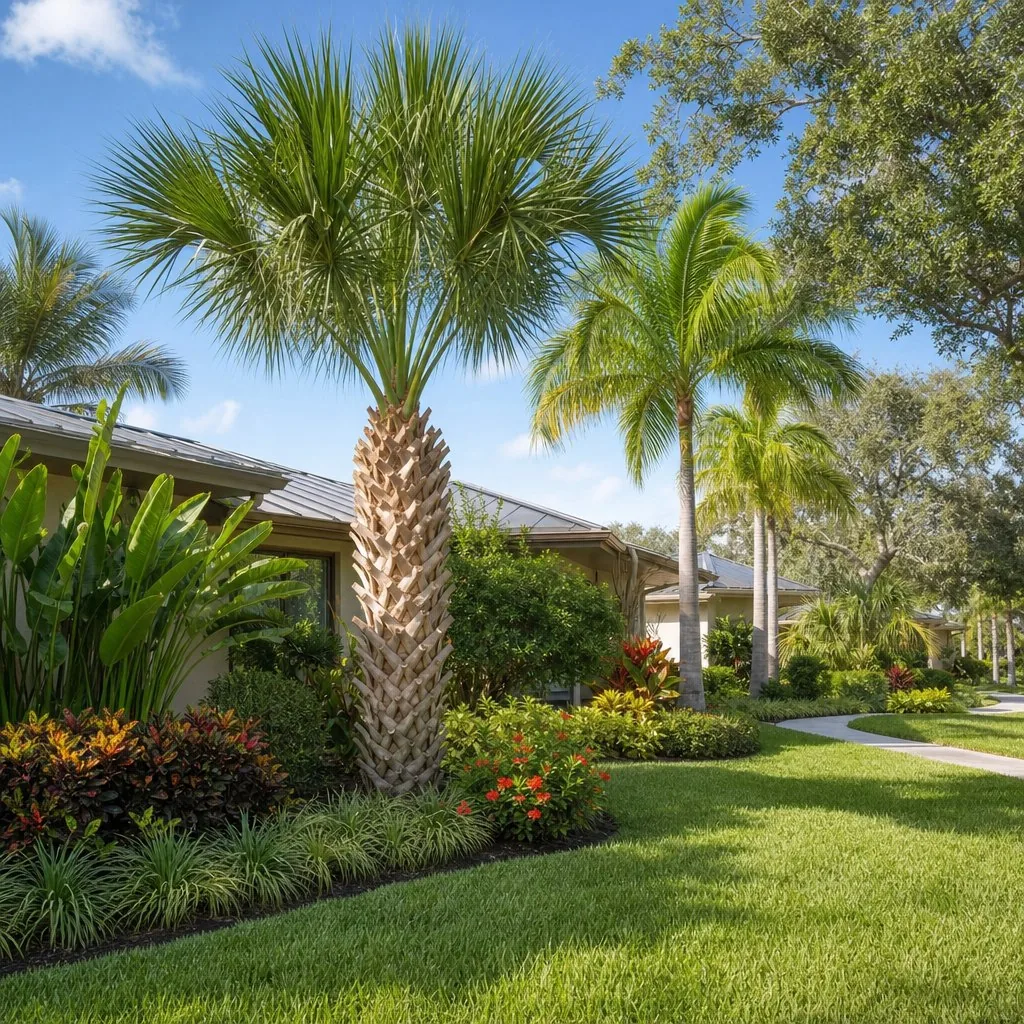
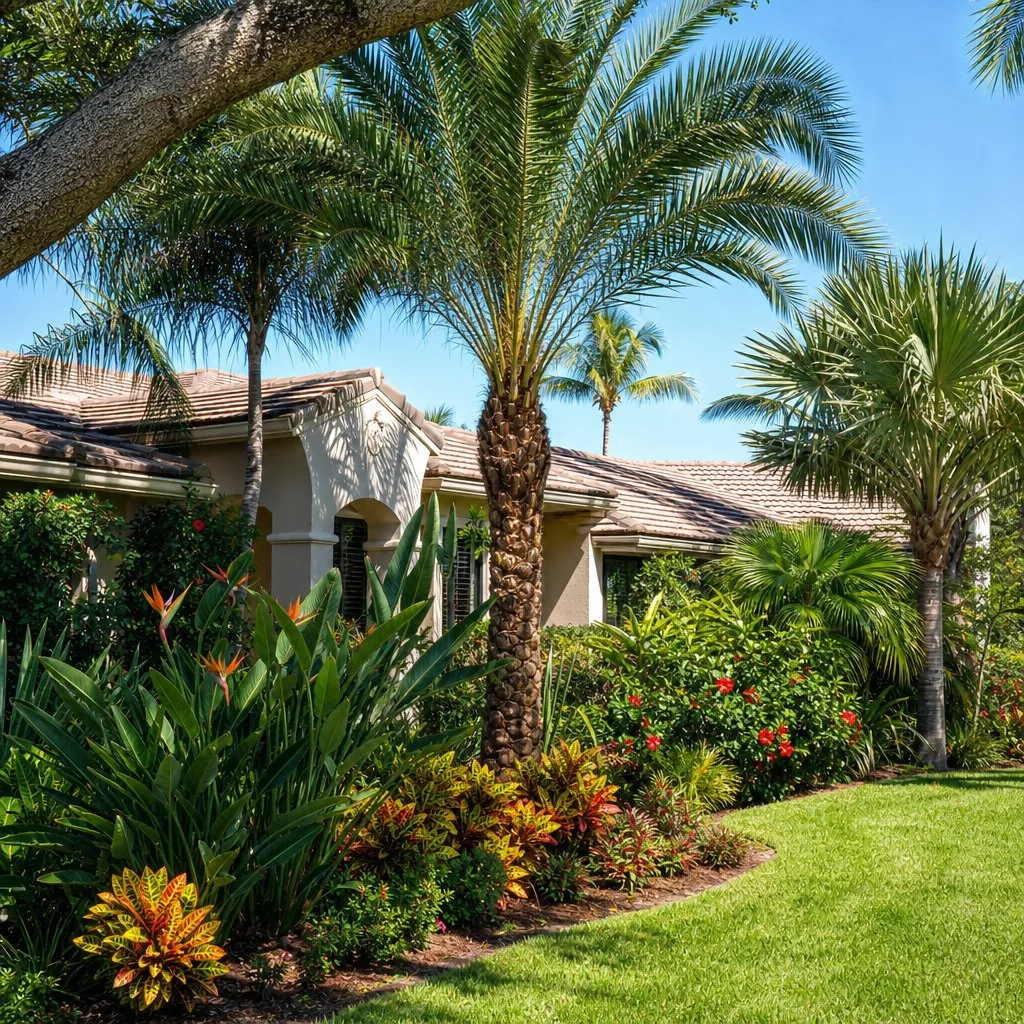
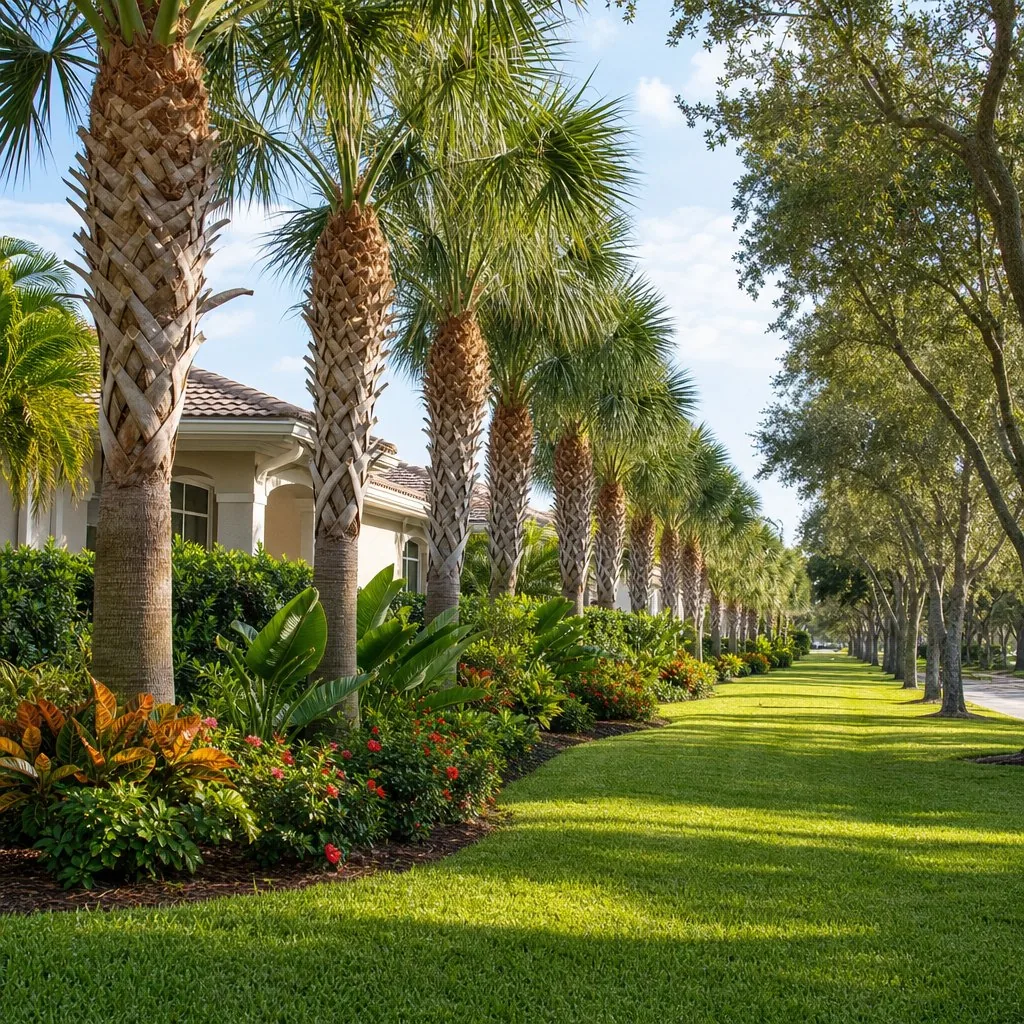
Clearance where it is needed. Fronds fouling a roof, a walkway, a driveway, or a light are cleared, taking account of how the palm will grow rather than trimming to the absolute minimum today.
Clean-up and haul-away. Fronds and stalks are heavy and awkward. All debris leaves with us and the area is left clean.
The practices we avoid, and why
Cutting palms back to a narrow upright tuft — sometimes called hurricane cutting or over-lifting — is widely requested and genuinely harmful. Stripping healthy green fronds removes the palm’s food production, stresses it, and does not make it safer in a storm; a palm’s wind resistance comes from its structure and its health, not from having had its canopy cut away. Palms treated this way commonly become thinner and weaker over successive years, and the damage accumulates.
Care around the crown matters just as much. Because there is a single growing point, careless cutting near it can cause harm the palm cannot repair. Fronds are removed cleanly without tearing into the trunk tissue, and green fronds are left in place unless there is a genuine reason to take them.
From property walk to service details: Budget Inputs for Tree-Work Scope
Cost depends on the number and height of the palms, the species, how much material is being removed, and access. Height is the main driver, since taller palms require appropriate equipment and take longer to work safely. Access is the other: palms standing clear are straightforward, while palms over a pool, a screen enclosure, a drive, a roof, or parked vehicles require material to be controlled on the way down. Debris volume and haul-away also count. We assess and quote on site.
Timeline
Most residential palm work is completed in a single visit. Properties with many palms, or palms requiring more equipment because of height or position, take longer. Clean-up and haul-away of all cuttings are part of the quoted scope.
From property walk to service details: Timing Choices for Tree-Work Scope
Most palms benefit from routine attention on a regular cycle rather than reactive work, with frequency depending on species and how much fruit and stalk they produce. It is worth scheduling when you can see a build-up of brown fronds, fruit or flower stalks dropping onto hard surfaces or into a pool, material hung up in the crown, or fronds fouling a roof or walkway. Clearing loose and dead material ahead of storm season is sensible — that is genuinely useful preparation, and it is quite different from cutting a palm back hard, which is not.
Local note: watering palms under the current order
Palms in the landscape still need water, and how that water is applied is currently constrained. Sarasota County is under a Modified Phase III "Extreme" Water Shortage order, extended through October 1, 2026. Irrigation is limited to once per week by the last digit of the address — 0 and 1 Monday, 2 and 3 Tuesday, 4 and 5 Wednesday, 6 and 7 Thursday, 8 and 9 Friday — and for sites under one acre only between 12 a.m. and 4 a.m. or between 8 p.m. and 11:59 p.m. on the assigned day. With one watering opportunity a week, watering deeply out over the root zone rather than lightly at the base is what keeps established palms in good condition. A palm that is already under water stress is a poor candidate for having healthy fronds removed on top of it. (Source: Southwest Florida Water Management District / Sarasota County.)
Frequently asked questions
How often should palms be trimmed? On a routine cycle rather than reactively, with frequency depending on the species and how much fruit and stalk material it produces. Many palms need less frequent attention than they receive.
Should I have my palms cut back before storm season? Removing dead fronds and loose hung-up material is worthwhile. Cutting healthy green fronds back hard is not — it stresses the palm without making it safer.
Why do you leave green fronds on? Because they are how the palm feeds itself. A palm cannot grow replacement limbs, so removing green foliage takes away capability it cannot readily replace.
Do you remove the fruit and flower stalks? Yes, on request. It reduces mess on drives, walkways and pools and cuts down on volunteer seedlings across the property.
Do you haul away the debris? Yes. Fronds and stalks are bulky and heavy; removal and clean-up are included in the quote.
Can you work on tall palms? Yes. Height and position determine the equipment and approach needed, and both are assessed as part of quoting the work.
Sources
Southwest Florida Water Management District — district water restrictions: swfwmd.state.fl.us.
Get a free quote for palm tree trimming in Sarasota →
From property walk to written acceptance
- Review Before CommitmentThe property review and estimate do not require the owner to proceed with the project.
- Walkthrough to Written ScopeObserved conditions, included work, and price are written down before a schedule is accepted.
Get a Free Quote
Describe the Sarasota site, its water movement, and the intended outdoor use.
Define the Sarasota Property Objective
Share the drainage, growth, access, and outdoor-living priorities so the Gulf Coast work area and outcome can be documented.
Get a Free QuoteFrequently Asked Questions
How does canopy work change the lawn underneath it?
Considerably, and it is worth deciding before the trimming rather than after. Floratam, the most widely produced St. Augustinegrass in Florida, has poor shade tolerance relative to other cultivars and does not persist well where it receives less than six hours of sunlight a day. Some cultivars handle shade better. Where a lawn is thinning under a canopy, the choice is between opening the canopy and changing the cultivar. Source: UF/IFAS Extension ENH5/LH010.
What does a trimming visit cover?
Frond and canopy work on palms and shade trees: deadwood removal, crown cleaning and clearance from roofs and lines. All cuttings and debris are hauled away as part of the quoted scope. Larger properties, properties with many palms, and palms needing more equipment because of height or position take longer, which is why the quote comes from the property rather than from a per-tree average.
Is thinning grass near paving a shade problem or something else?
Not always shade. The southern chinch bug is the major insect pest of St. Augustinegrass and its damage shows first as yellowish to brownish patches in full sun, along sidewalks, next to buildings and in other water-stressed spots. A patch in full sun near paving is worth checking for chinch bugs before it is treated as a watering or canopy fault. Source: UF/IFAS Extension ENH5/LH010.
Does trimming affect what the lawn is allowed to be watered?
It does not change the rule, but it changes what the lawn needs. Sarasota County is under SWFWMD's Modified Phase III one-day-per-week restrictions through 1 October 2026, so a lawn cannot simply be watered more to compensate for a canopy that is taking its light. Adjusting the canopy or the cultivar is the available lever, not extra irrigation. Source: SWFWMD, checked 3 August 2026.
Can a community association require trees or planting to be kept a particular way?
Not where doing so would need more water than the district permits. Under the current order no homeowners association or other entity may enforce deed restrictions or community standards requiring an increase in potable or domestic well water use, including replacing plant material to meet aesthetic standards. Where a community standard and the restriction conflict, the restriction governs. Source: SWFWMD, checked 3 August 2026.
What should a written tree and palm scope name?
It should name which trees and palms are being worked and where they stand, the work being done to each, clearance targets for roofs and lines, who removes the debris and whether that sits inside the quoted price, and anything explicitly excluded. Access constraints belong on the same document, because equipment reach is often what separates two quotes for what looks like the same job.